Power

Power
Tujuan pembuatan blog "Gogeneration" ini adalah sebagai sarana untuk berbagi ilmu pengetahuan dan mencerdaskan anak bangsa, dengan mengumpulkan tutorial dan artikel yang terserak di dunia maya maupun di literature-literature yang ada. Semoga dengan hadirnya blog "Gogeneration" ini dapat membawa manfaat bagi kita semua. dan saya ingin sharing tentang power plant dan substation khususnya di electrical, mechanical , automation, scada. walaupun sudah lebih dari sepuluh tahun menggeluti dunia itu tapi masih banyak hal yang harus dipelajari. dengan blog ini saya berharap bisa saling sharing, Blog ini didedikasikan kepada siapa pun yang mencintai ilmu pengetahuan
Powered By Blogger

Rabu, 27 April 2011

Pengujian Trafo Arus


CT atau Trafo Arus merupakan perantara pengukuran arus, dimana keterbatasan kemampuan baca alat ukur. Misal pada sistem saluran tegangan tinggi, arus yang mengalir adalah 2000A sedangkan alat ukur yang ada hanya sebatas 5A. Maka dibutuhkan sebuah CT yang mengubah representasi nilai aktual 2000A di lapangan menjadi 5A sehingga terbaca oleh alat ukur.
CT umumnya selain digunakan sebagai media pembacaan juga digunakan dalam sistem proteksi sistem tenaga listrik. Sistem proteksi dalam sistem tenaga listrik sangatlah kompleks sehingga CT itu sendiri dibuat dengan spesifikasi dan kelas yang bervariatif sesuai dengan kebituhan sistem yang ada.
Spesifikasi pada CT antara lain:
  1. Ratio CT, rasio CT merupakan spesifikasi dasar yang harus ada pada CT, dimana representasi nilai arus yang ada di lapangan di hitung dari besarnya rasio CT. Misal CT dengan rasio 2000/5A, nilai yang terukur di skunder CT adalah 2.5A, maka nilai aktual arus yang mengalir di penghantar adalah 1000A. Kesalahan rasio ataupun besarnya presentasi error (%err.) dapat berdampak pada besarnya kesalahan pembacaan di alat ukur, kesalahan penghitungan tarif, dan kesalahan operasi sistem proteksi.
  2. Burden atau nilai maksimum daya (dalam satuan VA) yang mampu dipikul oleh CT. Nilai daya ini harus lebih besar dari nilai yang terukur dari terminal skunder CT sampai dengan koil relay proteksi yang dikerjakan. Apabila lebih kecil, maka relay proteksi tidak akan bekerja untuk mengetripkan CB/PMT apabila terjadi gangguan.
  3. Class, kelas CT menentukan untuk sistem proteksi jenis apakah core CT tersebut. Misal untuk proteksi arus lebih digunakan kelas 5P20, untuk kelas tarif metering digunakan kelas 0.2 atau 0.5, untuk sistem proteksi busbar digunakan Class X atau PX.
  4. Kneepoint, adalah titik saturasi/jenuh saat CT melakukan excitasi tegangan. Umumnya proteksi busbar menggunakan tegangan sebagai penggerak koilnya. Tegangan dapat dihasilkan oleh CT ketika skunder CT diberikan impedansi seperti yang tertera pada Hukum Ohm. Kneepoint hanya terdapat pada CT dengan Class X atau PX. Besarnya tegangan kneepoint bisa mencapai 2000Volt, dan tentu saja besarnya kneepoint tergantung dari nilai atau desain yang diinginkan.
  5. Secondary Winding Resistance (Rct), atau impedansi dalam CT. Impedansi dalam CT pada umumnya sangat kecil, namun pada Class X nilai ini ditentukan dan tidak boleh melebihi nilai yang tertera disana. Misal: <2.5Ohm, maka impedansi CT pada Class X tidak boleh lebih dari 2.5Ohm atau CT tersebut dikembalikan ke pabrik untuk dilakukan penggantian.
Berdasarkan kriteria diatas, maka dapat dilakukan pengujian CT sebagai berikut:
Contoh-contoh beserta uraian dalam artikel kali ini saya ambil dari pengalaman-pengalaman saya melakukan SAT CT dan HV Equipments pada Project: Cikarang Listrindo 4x60MW Gas Power Plant Project, Inalum 275kV OHL Prot’n Panel Replacement Project, dan 2x250MW Muara Karang Gas Power Plant Project.

Ratio Test
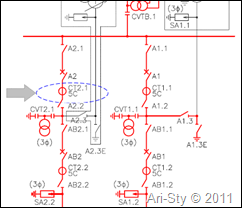
Lokasi Pengujian CT
Misal: Ratio CT = 2000/5A
Untuk melakukan pengujian bahwa apakah benar nilai skunder CT tersebut apabila line primer diberi arus sebesar 2000A adalah 5A, maka disini diperlukan alat injeksi arus yang mampu mengalirkan arus sebesar 2000A. Tentu saja alat ini sangat langka dan besar sekali.
Cara alternatif yang biasa digunakan adalah dengan alat inject yang lebih kecil, misal 500A. Untuk mendapatkan nilai 2000A maka kita dapat membuat gulungan atau lilitan sebanyak 2000A/500A = 4 kali gulungan.
Pengujian CT Metode Konvensional
Tentu saja nilainya tidaklah tepat seperti yang tertera pada kalkulator tapi setidaknya nilai tersebut dapat tercapai. Metering ataupun instrument terpasang harus menunjukkan nilai kurang-lebih 2000A.
Pada kasus umumnya yang terjadi di lapangan, ternyata jenis alat test yang mampu menghasilkan arus dalam jumlah yang besar ini cukup susah untuk dicari (karena harganya mahal maka umumnya kami rental dari temen-temen) Laughing out loud.
Di balik itu ternyata banyak CT yang hasil pengukurannya tidak linear / atau tidak berbanding lurus dengan rasio yang tertera. Dengan kata lain nilai presentase error-reading-nya bervariatif dan umumnya semakin kecil arus yang diberikan, presentase error-reading-nya semakin besar melampaui batas spesifikasi CT yang tertera pada nameplate. Padahal untuk beberapa sistem proteksi seperti Distance Relay menggunakan pembacaan parameter arus pada nilai yang rendah.
Fisik CTContoh Alat UjiContoh Pengukuran Arus Primer dg Clamp-ampere
Kemudian IEC mengeluarkan standarisasi bahwa nilai pengukuran CT harus linear minimal s/d 10% dari nilai rating current atau arus nominal yang tertera. Tentu saja ini menguntungkan bagi saya selaku tim SAT dan commissioning. Untuk menguji CT 2000A cukup dibutuhkan arus sebesar 10% x 2000A = 200A saja. Hmm.. alhasil alat ujinya pun tidak terlampau berat dan tidak banyak memakan tempat. Hot smile “bagasi masih muat untuk nyimpen oleh-oleh..”.
Kemudian cara pengujian dan kalkulasi presentasi error-reading-nya bagaimana?
Skema Wiring Diagram Saat Dilakukan Pengujian CT per Core
Contoh untuk 2000A:Formula Calculation CT Ratio
  • CT 2.1 - Core #3
  • Serial No. CT: 0805451CT primary terminal & secondary terminal
  • Terminal Tap yang digunakan 3S1~3S3
  • Class 0,5 Security Factor (FS) < 20, maksimum %err. adalah 0.5%
  • Ratio 2000/5 A
  • Injeksi Arus sebesar 200A, arus terukur pada sisi primer CT adalah: 199,96A, tentu saja ada losses di kabel dan sambungan pada sisi primer.
  • Arus terukur pada sisi skunder CT adalah: 501,55 mA
  • Dengan rumus diatas, maka nilai arus primernya adalah: 2000A dan nilai arus skundernya adalah 5,0165A
  • Sehingga %err. = 0,33% [OK]
Karena kurang hobby berhitung, maka saya buat dalam bentuk formula Excel, dan hasilnya akan seperti ini. Cukup memasukkan nilai aktual arus primer dan nilai aktual arus skunder. Cukup sederhana bukan?

Auto-Excel Calculation

Pengujian Secondary Burden CT (VA)

Pengujian secondary burden CT merupakan pengujian untuk mengetahui nilai aktual beban yang terpasang pada sisi sekunder CT, mulai dari kabel sampai dengan panel proteksi dan metering. Pengujian ini tidak bisa menentukan nilai burden nominal ataupun maksimal CT, untuk melakukan hal ini harus menggunakan metode tegangan atau dengan alat uji yang dikenal dengan nama CT Analyzer.
Mengetahui nilai burden pada sisi sekunder CT pada dasarnya cukup sederhana, karena hanya menggunakan perhitungan Hukum Ohm. Dimana VA = Arus x Tegangan.
Apabila CT mengeluarkan arus 1A nominal, maka kita bisa memberikan arus sebesar 1A untuk sisi kabel yang terpasang pada CT. Terminal sekunder CT tidak boleh ikut dialiri arus karena akan berdampak timbulnya arus besar pada sisi primer.
Di dalam pengujian ini pada dasarnya kita hanya ingin mengetahui berapa sih besarnya impedansi loop tertutup pada beban CT (kabel + relay + metering + dst). Apabila nilai burden atau impedansi terukur pada arus 1A melebihi rating burden nominal CT (dalam satuan VA), maka harus dilakukan penggantian kabel yang lebih besar atau penggantian relay dengan burden yang lebih kecil.
Berikut ini adalah skema wiring pada saat dilakukan pengujian Secondary CT Burden:
Skema Wiring Diagram untuk Pengujian Secondary Burden CT
Berikut ini adalah contoh perhitungan nilai Secondary Burden yang didapat, disini saya buat sistem perhitungan otomatis dengan menggunakan Excel, dimana formulanya sangat mudah diingat (VA = Volt x Ampere):
Formulasi otomatis untuk menghitung Secondary Burden CT

Pengujian Secondary Winding Resistance (Rct)

Ari: Skema Wiring untuk Pengujian Secondary Winding Resistance (Rct)
Pengujian Secondary Winding CT umumnya mengacu pada standar IEC 60076-1. Formula dan sistem pengujian harus mengacu pada setandar tersebut. Pengujian diluar standar tersebut tidak sah dan tidak memenuhi kriteria pengujian standar CT.
Berdasarkan pada IEC 60076-1, elemen-elemen pengukuran yang harus diambil saat pengujian Secondary Winding CT adalah sebagai berikut:
  • IDC :   Arus DC aktual yang diinjeksikan ke terminal sekunder CT. biasanya nilai arus yang saya gunakan adalah 5A untuk CT tipe 5A nominal secondary output.
  • VDC :   Tegangan terukur yang dihasilkan oleh injeksi arus DC pada sisi kumparan/winding CT.
  • R meas :   Nilai winding resistance atau tahanan dalam CT, yang diperoleh dari hasil perhitungan VDC/IDC (Hukum Ohm). 
  • Time :   Total waktu yang diperlukan dalam pengujian
  • Dev :   Sudut deviasi yang dinyatakan dalam nilai % antara nilai maksimum dan minimum yang terukur dan dievaluasi sekurang-kurangnya 10 detik dari pengukuran. Hasil dinyatakan stabil jika Dev < 0.1%.
  • Tmeas :   ambient temperature atau suhu ruang
  • Tref :   operating temperature dari CT, biasanya nilai yang digunakan umumnya adalah 75°C. Sebaiknya lihat data FAT pabrikan atau referensi manual dari CT.
Sehingga formulasi perhitungan Secondary Winding Burden CT dapat dibuat sebagai berikut ini:
Ari: Rumus Untuk Menentukan Nilai Tahanan Referensi CT
Pengujian secondary burden ini cukup penting, mengingat bahwa test ini sekaligus merupakan pengecekan terhadap rangkaian beban CT seperti panel relay, metering, buspro, logger, dsb. Rangkaian CT harus selalu tertutup (short-circuit) agar dapat mengasilkan arus.
Rangkaian tidak boleh ada impedansi yang besar atau bahkan terpotong, apabila terjadi maka arus tidak dapat mengalir dan CT menjadi panas dan overload. Alhasil CT bisa rusak, pecah, atau bahkan meledak. Pengujian ini sekaligus memastikan kondisi rangkain CT layak dioperasikan ataukah belum.

Pengujian Eksitasi CT atau CT Kneepoint

Di dalam pengujian titik saturasi CT atau kneepoint ada tiga jenis Standar yang mengatur, ketiganya memiliki nilai kneepoint yang berbeda namun ketiganya dianggap sah, bergantung dari Standar apa yang hendak digunakan setidaknya Produsen CT dan End-User menggunakan Standar yang sama.
  • IEC/BS - According to IEC 60044-1, the knee point is defined as the point on the curve where a voltage increment of 10% increases the current by 50%.
  • ANSI 45° - According to IEEE C57.13, the knee point is the point where, with a double logarithmic representation, the tangent line to the curve forms a 45° angle.Applies to current transformer cores without an air gap.
  • ANSI 30° - Like ANSI 45° but forming a 30° angle.Applies to current transformer cores with an air gap.
Di Indonesia umumnya mengacu pada Standar IEC, sebagai standar intalasi tegangan tinggi dan menengah.
Untuk melakukan pengujian CT, maka diperlukan sebuah sumber tegangan AC yang mampu digunakan untuk menguji CT Class X, dimana nilai kneepoint-nya bisa mencapai 2000Volts. Tegangan eksitasi diberikan pada terminal skunder CT di tiap Core-nya, kemudian tegangan dinaikan perlahan sampai mencapai nilai arus nominal CT. Pengukuran arus bisa dilakukan dengan cara memasang Ampere-meter yang dihubung seri dengan alat injeksi atau penggunakan clamp meter pada kabel output alat injeksi tegangan.
Model pengujian yang umumnya saya gunakan adalah seperti di bawah ini:
Ari: Skema Wiring Pengujian Kneepoint CT
Setiap perubahan arus signifikan atau setiap kelipatan berapa volts dari tegangan, bisa dilakukan pengukuran dan pencatatan secara simultan agar di dapat grafik yang halus dan presisi. Contoh grafik tersebut adalah seperti berikut ini:
Nilai-nilai eksitasi tegangan pada CT dan nilai arus yang terukur pada sisi sekunder CT
Jika dibuat grafik pada Excel, maka grafik-nya akan berbentuk seperti dibawah ini:
Ari: Grafik Kneepoint CT, titik ditentukan dengan menggunakan Standar IEC
Sayangnya, tidak semua atau jarang sekali pabrikan CT yang menyebutkan nilai Kneepoint yang didapat saat dilakukan FAT (karena tidak semua orang mudah dan mengerti untuk menentukan nilai dari pengukuran yang didapat). Biasanya pabrikan hanya melampirkan data nilai eksitasi beserta nilai arus yang di dapat serta melampirkan grafiknya.
Kunci inti pengujian tegangan eksitasi pada CT ini hanyalah menentukan di nilai berapa Volt, CT sudah mencapai titik jenuh dan sudah tidak menghasilkan perubahan arus yang signifikan.
Misal spesifikasi CT adalah Vk > 1,7kV maka tegangan eksitasi CT harus melebihi 1,7kV untuk menghasilkan 5A, setidaknya 2kV baru mencapai 5A. Maka CT tersebut memiliki spesifikasi yang sesuai dengan yang tertera.

Pengujian Isolasi atau Megger

Pengujian diatas secara keseluruhan hanyalah untuk menentukan bahwa CT tersebut layak beroperasi sesuai spesifikasi desain sistem dan tidak terjadi kesalahan pengukuran arus sebenarnya dimana CT merupakan elemen metering dan proteksi.
Untuk menentukan apakah CT tersebut layak bertegangan ataukah tidak, maka harus dilakukan pengujian Isolasi atau Megger. Megger yang digunakan adalah 5kV untuk sisi primer dan 1kV untuk sisi skunder.
Titik yang bisa dilakukan pengetesan adalah:
  • Terminal Primer dengan Ground tidak boleh ada hubungan
  • Terminal Primer dengan Skunder tidak boleh ada hubungan
  • Terminal Skunder dengan Ground tidak boleh ada hubungan

Cek Fisik

CT saat datang dan saat dipasang harus diulakukan cek fisik terlebih dahulu sebagai wujud sebuah quality control. Tidak boleh ada retakan, atau bahkan rembesan oli trafo.
“Mudah-mudahan artikel diatas mampu menambah wawasan dan meningkatkan kualitas kontrol terhadap produk-produk ataupun proyek-proyek pengembangan infrastruktur kelistrikan di Indonesia. Listrik yang lebih baik untuk masa depan, dan mari ber-Hemat Energi.”

kalkulasi tegangan jatuh listrik


kalkulasi tegangan jatuh listrik

Apa arti praktis kalkulasi tegangan jatuh listrik bagi seorang perencana listrik ketenagaan? Kalkulasi ini adalah sama artinya dengan perencanaan ukuran-ukuran kabel daya dan sistem proteksi listrik ketenagaan yang aman suatu bangunan atau utilitas plant. Contohnya jika seorang insinyur listrik diminta untuk merancang ukuran kabel 3-fasa untuk suatu pompa submersible listrik 150 HP, 380 V yang akan digunakan sebagai pompa banjir( katakan banjir lumpur Porong Sidoarjo). Pompa tersebut berjarak 125 meter dari sumber listriknya(atau panel induknya), berapa ukuran kabel yang aman, tidak panas tetapi ekonomis, kemudian berapa ukuran rating pemutus tenaga (Circuit Breaker atau Fuse) agar dapat memproteksi kabel secara aman terhadap beban lebih.

Seorang mahasiswa calon insinyur atau ahli madya yang serius belajar disiplin ilmunya seharusnya menguasai program spread-sheet excel sehingga kalkulasi kelistrikan secara umum akan lebih cepat difahami, dilatih, dan diingat terus sebagai pegangan bagi seorang praktisi listrik ketenagaan. Karena variabel-variabel ukuran kabel yang banyak, dan pembebanan arus yang juga bervariasi tergantung dari kebutuhan beban listrik, maka menggunakan program excel adalah merupakan keharusan. Berikut ini bentuk formulasi dasar tegangan jatuh dalam bentuk format excel/ppt yang dapat dikembangkan lebih jauh untuk aplikasi yang berbeda.

Kalkulasi tegangan jatuh listrik sebenarnya berdasarkan hukum Ohm kemudian ditambahkan faktor reaktansi (induktif atau kapasitif) dan faktor daya, maka formulasinya untuk aplikasi tegangan rendah sampai tegangan menengah 20 KV dapat ditulis sbb :

Tegangan jatuh = 1.732*R*I*cos f + 1.732*X*I*sin f

dimana 1.732 adalah hasil akar 3 ( beban 3-fasa), I adalah arus beban, R adalah resistansi arus bolak-balik AC ( bukan arus searah DC) , X adalah reaktansi induktif, dan cos f adalah faktor daya.

Kemudian data-data resistansi kabel dapat dicari dari buku katalog spesifikasi kabel seperti Supreme, Kabel Metal, Kabelindo, Tranka, Voksel yang bisa diminta langsung ke fabrikannya atau produk luar negeri untuk industri perminyakan seperti Pirelli atau Okonite. Data resistansi kabel pada umumnya disajikan dalam bentuk satuan Ohm per-kilometer sebagai resistansi arus searah DC, artinya resistansi terbaca jika kita mengukur dengan alat ukur Ohm-meter. Yang kita perlukan adalah resistansi AC (arus bolak-balik), kalau ditampilkan resistansi AC pada suhu 90 derajat Celsius maka resistansinya menjadi lebih besar. Umumnya suhu inti konduktor kabel yang diizinkan adalah 70 derajat Celsius, jadi resistansinya lebih kecil dari tabel.

Rumus tegangan jatuh diatas dapat diaplikasikan untuk arus searah DC maka faktor daya = 1 sehingga formulasinya untuk kabel 2 jalur adalah Tegangan jatuh = 2*R*I dimana R adalah resistansi DC ( hasil pengukuran alat Ohm-meter) dan I adalah arus searah DC. 

Berapa jatuh tegangan kerja yang diizinkan. Jika tegangan rumah 220 Volt dan misalnya kita menerima dari sumber PLN hanya 200 Volt berari jatuh tegangan 10%, maka hal ini akan mengganggu performance motor listrik mesin pendingin (Air Conditioner atau Kulkas) atau pompa air. Jatuh tegangan maksimum 5% dari sumber ke beban konsumen masih dapat diterima sistem (misalnya sumber 400 Volt dan kita sebagai konsumen menerima tegangan kerja setelah dibebani sebesar 380 Volt), tetapi untuk perencanaan terkadang ada yang menetapkan 2,5 %, tergantung untuk aplikasi dimana dan semuanya akan mempengaruhi total biaya instalasi listrik

Sebagai referensi online, pembaca dapat meng-click link-link situs Okonite atau General Electric untuk studi perbandingan aplikasi tegangan jatuh, tetapi ingat rating tegangan listrik Amerika berbeda dengan Indonesia, jadi kita harus mengkonversikan dahulu dan pula mereka menggunakan standar ukuran kabel AWG( lihat tabel konversi AWG dan mm2 dibawah). Silahkan pembaca melatih formulasi tegangan jatuh ini dengan excel dengan data dari berbagai sumber dan silahkan dikembangkan lebih jauh. 

sumber: http://www.geocities.com/kelistrikan/powercable.htm (situs sudah tidak dapat dibuka karena yahoo geocities sudah menghentikan pelayanan gratisnya

DOWNLOAD TABEL KALKULASI TEGANGAN JATUH BERDASARKAN JENIS DAN UKURAN KABEL:
DISINI !!!!

Senin, 18 April 2011

Protective earthing


7.1 Introduction
Earthing is a general term broadly representing grounding of power systems and bonding of equipment bodies to grounded electrodes. Earthing associated with current carrying power conductors, usually neutral conductor, is normally essential for the stability of the system and is generally known as system earthing. Earthing of non-current carrying metal works of equipment bodies is essential for the safety of life and property and is generally known as safety equipment earthing. The basic requirements of any earthing system are
(i) It should consist of equipotential bonding conductors capable of carrying the prospective earth fault current and a group of pipe/rod/plate earth electrodes for dissipating the current to the general mass of the earth without exceeding the allowable temperature limits in order to maintain all non-current carrying metal works reasonably at earth potential and to avoid dangerous contact potentials being developed on such metal works.
(ii) It should limit earth resistance sufficiently low to permit adequate fault current for the operation of protective devices in time and to reduce neutral shifting.
(iii) It should be mechanically strong, withstand corrosion and retain electrical continuity during
the life of the installation. Earth electrodes, which form part of the earthing system, are provided to dissipate fault current during earth fault and to maintain the earth resistance to a reasonable value so as to avoid rise of potential of the earthing grid. The resistance to earth of an electrode of given dimensions is dependent on the electrical resistivity of the soil in which it is installed. In addition to the measurement of soil resistivity at the design stage, it is essential to repeat the measurement at the pre-commission stage
also, as the effectiveness of the earthing system depends on the value of soil resistivity . Hence before energising electric supply lines and apparatus it is necessary that all components of the earthing system including the soil are inspected and tested to ensure efficient functioning of the system.
7.2 Pre – commission inspection and checks
(i) General Layout
· Check whether the layout of earthing is as per the scheme approved by the department of Electrical Inspectorate.
· Check whether the number of plate electrodes and pipe electrodes are as per the approved scheme.
· Check whether the spacing between the electrodes are as per the approved scheme- 5 metres for pipe electrodes and 8 metres for plate electrodes.
(ii) Earth electrodes
· Check whether all the earth electrode terminals are visible and numbered. The numbering shall be done both on the top of trough cover and inside the trough.
· Check the size of earth electrodes used – 1200 x 1200 x 12.6 mm for cast iron plate and 600 x 600 x 6.3 mm for copper plate – One cast iron plate is equivalent to 4 copper plates of standard size.
· Check the dimension of earth electrode trough – 1000 x 500 x 600 mm for plate electrodes and 500 x 400 x 350 mm for pipe electrodes – This is for easiness of connections and convenience of testing .
· Check the class of pipe used for pipe electrodes – at least class B pipes shall be used.
· Check whether permanent watering arrangement is provided at sub-stations and where earth resistivity is relatively high.
· Check whether funnels are provided for watering the electrodes.
· Check the size of the earth mat of EHT stations with the designed values (spread of earth mat, mesh size, conductor size, size of risers, depth of laying etc.)
· In the case of earth mats, check the size of blue granite jelly, its depth and area of spread. The area of spread shall extend beyond fencing atleast by 1.5 metres.
· Check whether all the earth electrodes are interconnected to form a closed mesh.
(iii) Earth continuity strips and earthing conductors.
· Check whether two continuity strips have been taken from the plate electrodes to the top connector link.
· Where GI is used for earthing, check whether hot dip galvanized GI strips and conductors are used. GI is allowed where corrosion factor is within permissible limits and earth resistivity is more than 100 ohm-metre.
· Check the size of main earth bus for conformity with the approved size.
· Check the size of the sub earth buses and their interconnections.
· Check the size and effectiveness of connections of horizontal and vertical earth buses of cubicle type switch board sections.
· Check the interconnection of earth bus sections in switch boards.
· Check whether duplicate earthing of adequate size is provided for switches, isolators and control gears.
· Check whether duplicate earthing is provided for body of transformers, motors and other equipments. The two connections shall be taken from opposite sides.
· Check whether duplicate earthing is provided for the neutrals of transformers and generators . There shall be one direct connection from each neutral to a separate earth electrode but interconnected with the earthing system.
· Check whether continuous earth strip is run from the top of lattice type towers and structures of EHT stations and lines.
· Check whether the bottom of each High voltage bushing is earthed using earthing strip.
· Check whether outdoor CT, PT, breaker units, isolators, lightning arrestors etc. are directly earthed to the risers of the earth mat / earthing grid.
(iv) Connections and joints
· Check whether connections in the earthing system are made properly . The contact surfaces shall be properly tinned and contacts perfectly bonded and seated – Riveting, bracing or bolting shall be done effectively.
· Inspect the welded joints of GI earth strips and conductors – The welded surfaces shall be covered with zinc dichromate painting / bituminous coating.
· Check the quality of galvanisation of bolts and nuts used for earth lead connections – Hot dip galvanised rust free bolts and nuts shall be used.
· In the case of earth mats, check the perfection of welding of mesh joints.
7. 3 Precommission tests
7. 3.1 Earth Testers and principle of measurement
The most commonly used earth tester is the four terminal tester. The tester comprises of a current source and a meter in a single instrument. The resistance is directly read in the tester from which the earth resistivity is computed. Wenner’s four electrode method is followed for earth resistivity measurement. When four electrodes are driven along a straight line at equal intervals and a current is passed through the two outer electrodes, the current flowing into the earth produces an electric field proportional to the current density and the resistivity of the soil. The voltage measured between the two inner electrodes is therefore proportional to the field. Consequently the resistivity will be proportional to the ratio of the
voltage to current. The earth resistivity of the soil is given by
7 .3.2 Earth Resistivity – Test Procedure
The resistivity of soil varies over a wide range depending on the composition and moisture content of the soil. It is therefore advisable to conduct earth resistivity tests during dry season in order to get conservative results. In the case of sub – stations and generating stations, at least eight test directions shall be chosen from the centre of the station to cover the entire site. For very large station sites this number may be increased. In the case of transmission lines, the measurements shall be taken along the direction of the line throughout the length, at least once in every 4 kms. The connections for the test are given in fig 7.1
The four electrodes are driven into the earth along a straight line at equal intervals . The depth of driving the electrodes in the ground shall be of the order 10 to 15 cms. The earth megger is placed on a steady and approximately level base. The links between the terminals are opened and the four electrodes connected to the instrument terminals. Appropriate range in the instrument is selected to obtain accurate readings. The readings are taken while turning the crank at around 135 revolutions per minute. The resistivity is calculated by substituting the value of R obtained from the test in the equation in para 7.3.1.
If the resistance of the electrodes (two inner potential electrodes) is comparatively high, a correction of the test result is necessary depending on its value. For this purpose, the resistance of the voltage circuit of the instrument Rp is measured by connecting the instrument as shown in fig. 7.2.
Average earth resistivity at the site
The resistivity of the soil at many sites have been found varying with the depth of the soil and also with horizontal distances. Variation of the resistivity with depth is mainly due to stratification of earth layers and is found predominant when compared to the variation with horizontal distances. For the correct computation of earth resistivity, it is desirable to get information about the horizontal and vertical variations of earth resistivity at the site under consideration. The vertical variations may be detected by repeating the measurements at a given location in a chosen direction with different electrode spacing. The spacings may be increased in steps of 2, 5, 10, 15, 25 and 50 metres or more. The horizontal variations are studied by taking measurements in various directions from the centre of the station. If the variation in the earth resistivity readings for different electrode spacings in a direction is within 20 to 30 percent, the soil is considered to be uniform. When the spacing is increased gradually from low values, a stage will be reached at which the resistivity readings become more or less constant irrespective of the increase in the electrode spacing. This value of the resistivity is noted as the resistivity in that direction. Similarly, the resistivity for at least eight equally spaced directions from the centre of the site are measured. These resistivities are plotted on a graph sheet. A closed curve is plotted on the graph sheet joining the resistivity points to get a polar resistivity curve (see fig. 7.3). The area inside the polar curve is measured and the circle of the equivalent area is found out. The radius of the equivalent circle is the average earth resistivity of the site under consideration. The value will be reasonably accurate when the soil is homogeneous. If the soil is not
homogeneous, a curve of resistivity versus electrode spacing shall be plotted and this curve further analysed to decide stratification of the soil into two or more layers of appropriate thickness or a soil of gradual resistivity variation. Computation of earth resistivity of heterogeneous soil is highly involved and reference to text books may be made.
7.3.3 Measurement of earth electrode resistance
The same four terminal earth tester described under para 7.3.1 can be used for measurement of earth electrode resistance. One of the current and potential terminals are shorted to form a common terminal which is connected to the test electrode and the other current and potential terminals connected to two auxilliary electrodes. Alternately, 3 terminal earth testers with common terminal to be connected to the test electrode and independent current and potential terminals for connections to auxiliary electrodes are available for measurement of earth electrode resistance. Two standard auxiliary electrodes supplied with the instrument are used for the measurement. The depth of driving of auxiliary electrodes shall be low compared to the spacing between the electrodes. Generally, the auxilliary electrodes are driven at 15 metres and 30 metres from the test electrode. The connections may be checked before taking the measurement .
Resistance of individual electrodes
Resistance of individual electrodes is measured after disconnecting all interconnections to the electrode. Earth leads from the earth bus, neutral of transformers/generators and interconnections from other earth electrodes are disconnected before taking the measurement. Connections to the earth tester are made as described above. The cranking lever of the earth tester is rotated at the specified speed. The reading of the earth tester gives the earth resistance of the particular electrode. Resistance of all earth electrodes shall be measured in the above manner and the values recorded in a register for future reference.
Effective earth resistance of the station
After measuring the resistance of individual electrodes, reconnect all earth leads including interconnection of earth electrodes. Now measure the earth resistance at the outer most electrode, driving the auxiliary electrodes in the outward direction. The value so measured gives the effective earth resistance of the station.
Points to note
· The test electrode and the auxiliary electrodes shall be in a straight line.
· The spacing between the electrodes shall be approximately equal.
· The auxiliary electrodes shall be driven to approximately the same depth and the depth shall be very low compared to the spacing between electrodes.
· The tester shall be cranked at the specified and uniform speed.
Acceptable limits of earth resistance
The acceptable limits of earth resistance values for various systems are given below:
7.3.4 Earth Continuity Test
Non-current carrying metal parts of equipments, control gears and devices are provided with duplicate earth connections to ensure effective equipotential bonding with the earth bus and thereby to the earth electrodes. Duplicate earth leads are provided to ensure that failure of one lead does not result in the disconnection of the equipment from the earthing system. In order to ensure the effectiveness of the protective earthing system, it is necessary to test the continuity of various earthing conductors in the system. The test procedure for earth continuity test is the same as that for the measurement of earth electrode resistance. The earth tester is set ready with the auxilliary electrodes driven at 15 m. and 30 m. from the outer most earth electrode of the earthing grid. The common terminal of the earth tester is connected to a long flexible copper cable. The other end of the cable is connected or held tight to the body of the equipment under test. The tester is now cranked to the specified speed and the reading noted. The reading shall be very low and near to the combined earth resistance of the system. Repeat the test for all equipments and devices connected to the system.
A high value of earth resistance in the earth continuity test is an indication of loose contact in the terminations/joints or a break in the earth leads/conductors. A thorough check shall be carried out to locate the fault and corrective action taken.
7.3.5 Measurement of Earth Loop Impedance
When a line to earth fault occurs, the fault current shall have a value sufficient to discriminately operate the protective devices. The value of the fault current is determined by the impedance of the closed loop available for the fault current to circulate. The earth loop impedance includes the impedance of the line conductors, fault, earth continuity conductors, earth leads, earth electrodes etc.
Measurement of earth loop impedance is of greater importance in the case of HT and EHT installations where system earthing and equipment earthing are connected to the same grid or bus. Connections for measurement the earth loop impedance is shown in fig. 7.5. When HRC fuses are used to protect the circuit, approximately five times the rated current of the fuse is taken as the minimum required current for fast clearing of the fault. When protective relays are used, a fault current of around two times the setting of the relay is considered the minimum required current. The measured value of earth loop impedance shall be low enough to produce the above fault currents. The earth loop impedance may be measured at different levels of distribution i.e. at the fag end, DB level,
SSB, MCC, MSB etc.
Share and Enjoy:
  • E-mail this story to a friend!
  • Print this article!
  • Digg
  • Sphinn
  • del.icio.us
  • Facebook
  • Mixx
  • Google
  • blogmarks
  • Blogsvine
  • feedmelinks
  • Furl
  • Gwar
  • LinkArena
  • LinkedIn
  • Live
  • muti
  • MySpace
  • NewsVine
  • Ping.fm
  • Reddit
  • Smarking
  • SphereIt
  • StumbleUpon
  • Technorati
  • TwitThis
  • Yahoo! Buzz
If you enjoyed this post, make sure yousubscribe to my RSS feed!

2 Responses to “7.Protective earthing”